











After spending the past few years grappling with student academic dishonesty with Artificial Intelligence, Eureka College has implemented a new, multi-level AI & Academic Integrity Framework, outlining the ways students are allowed to utilize AI in their courses.
Dr. Annie Kelvie, Associate Professor of English, is currently teaching a course centered around understanding and utilizing AI in the workforce. As Faculty President and a writing instructor, Kelvie has been well aware of the increasing amount of AI usage across courses.
“Over the past couple of years, to be quite frank, it [student writing] is full of the classic tells of AI writing, such as lists of three, overuse of metaphors involving weaving, overuse of words like delve, and little to no analysis of assigned texts,” Kelvie said.
The AI framework consists of levels 0, 1, 2, 3, and 4. Each lays out how AI can be used in that course, beginning with a no-tolerance policy and ending with the ability to cocreate. The policy does not allow students to submit fully generated assignments, rather, aims to teach students how and when to use these tools.
However, concerns have risen from several members of the college community about allowing AI in this manner. Colton Davis, junior, has been vocal about his discontent with AI being used in assignments, and expressed worry that integrating it into courses takes away student ability to learn and think for themselves.
“I think AI, ultimately, should not be used in any courses. It shouldn’t be used as help or guidelines. I think students need to get back to critically thinking on their own, and I don’t think it’s good for the health of the school,” Davis said.
Davis, when discussing the state of AI in school, references a policy made by UChicago switching to analog teaching in social science courses. These policies have been implemented in schools across the nation as another way to combat AI dishonesty, and Eureka is no exception.
Dr. David Eisenberg, Associate Professor of Political Science & Division Chair, has long taught classes without the assistance of technology. This year, all his classes are screen-free for students as well, with the only exception being submitting papers via Canvas. This decision came after Eisenberg observed a negative change in student engagement.
“It’s a small minority of students who are still committed to reading and being engaged academically. I think it’s been a sort of steady decline. I’m assuming AI contributes to this,” Eisenberg said.
In addition to losing writing ability, students may use AI to summarize reading for class and create discussion points for them, instead of synthesizing the texts themselves.
“Most of your life, you do not have the time or the luxury to sit and read and think, right? This is why sometimes people speak of going to college as a privilege. So taking that part of the equation out, you might not regret it now, but you might regret it when you’re older and realize you spent all this time and money not learning as much as you could have,” Kelvie said.
The use of AI fundamentally alters the role college plays in students’ lives. When assignments aren’t completed by students, not only do they lose out on their academic abilities, they lose critical thinking accompanying them.
“Students really lose the ability to write, for one, but to think more foundationally, AI does the thinking for you,” Eisenberg said. “You can turn in a paper without having given it any thought, so I think it really undermines creative thinking in a lot of ways.”
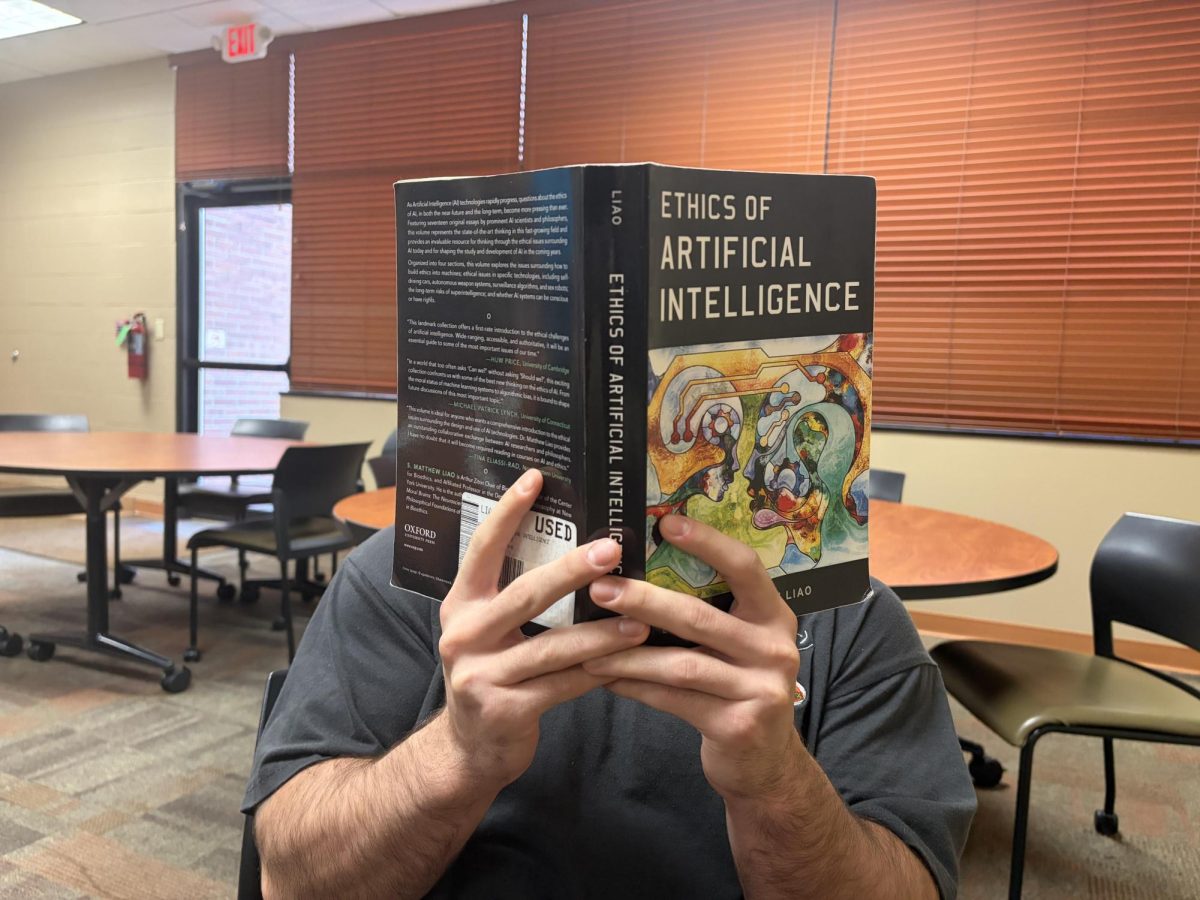
In 2023, The Pegasus published an article titled AI Bears Danger of Stealing Student Voices. Three years later, the title has become an unfortunate reality across the academic and creative avenues of the college, which ultimately prompted the several changes made to individual classrooms and college policy.
Davis, alongside other students, still work towards their degree without AI assistance. He urges others to do the same, and recognize college for more than a degree.
“It’s a lot more fulfilling than, for example, putting [a text] into AI asking it to summarize a chapter of a book, and then you get the dumbed down version. When you read something, everyone can have a different interpretation, and that is how you formulate your thoughts and opinions on the world better,” Davis said.
However, these tools have become prevalent in many aspects of daily life, not just academia. How Eureka has begun handling them emulates much of what students can expect in their lives post-graduation.
As technology continues to advance, it can often be an individual choice on how we interact with it. While there may be many benefits to using Artificial Intelligence, there are equal drawbacks regarding how students learn to think and create, including the loss of creative processes that have been long engrained in our cultural development.
While professors and administrators continue to work with this change, it’s ultimately up to students to decide for themselves how they choose to use AI, and understand how it may impact their own lives outside of their grades in class.