



At the end of May 2026, a group of nine Eureka College students traveled to London for a course titled Multimedia Music Journalism, a two-week experience where students would learn the ins and outs of music media production in one of the largest music hubs of the world.
The trip, which took place from May 16th-May 30th, was organized through the Cooperative Center for Study Abroad, CCSA for short. Students had the opportunity to choose from a variety of different courses offered through the center.
Dr. Phil Duncan, Assistant Professor of Communication and International Studies Coordinator, chose London to study music for a variety of reasons.
“There’s a really rich history in London in particular of discussing, contextualizing, and historicizing music in a way that we do somewhat in this country, but maybe not as concentrated or as kind of prolific,” Duncan said.
Alumna Jaden Randall experienced the trip to London a week after her graduation. Randall graduated with a degree in Communication & Media Studies, meaning a lot of the work done on the trip was familiar to her and would serve as a résumé aid as she enters the field of communication.
“I got to continue to develop the media skills I learned from classes at Eureka, and got to apply them in a more creative way. While there was general outlines of what needed to be done, I got to be a lot more creative with everything,” Randall said.
Other students, however, had little to no experience in audio/visual recording or journalistic writing, meaning the work in London was their first experience with the equipment and media-focused environment.
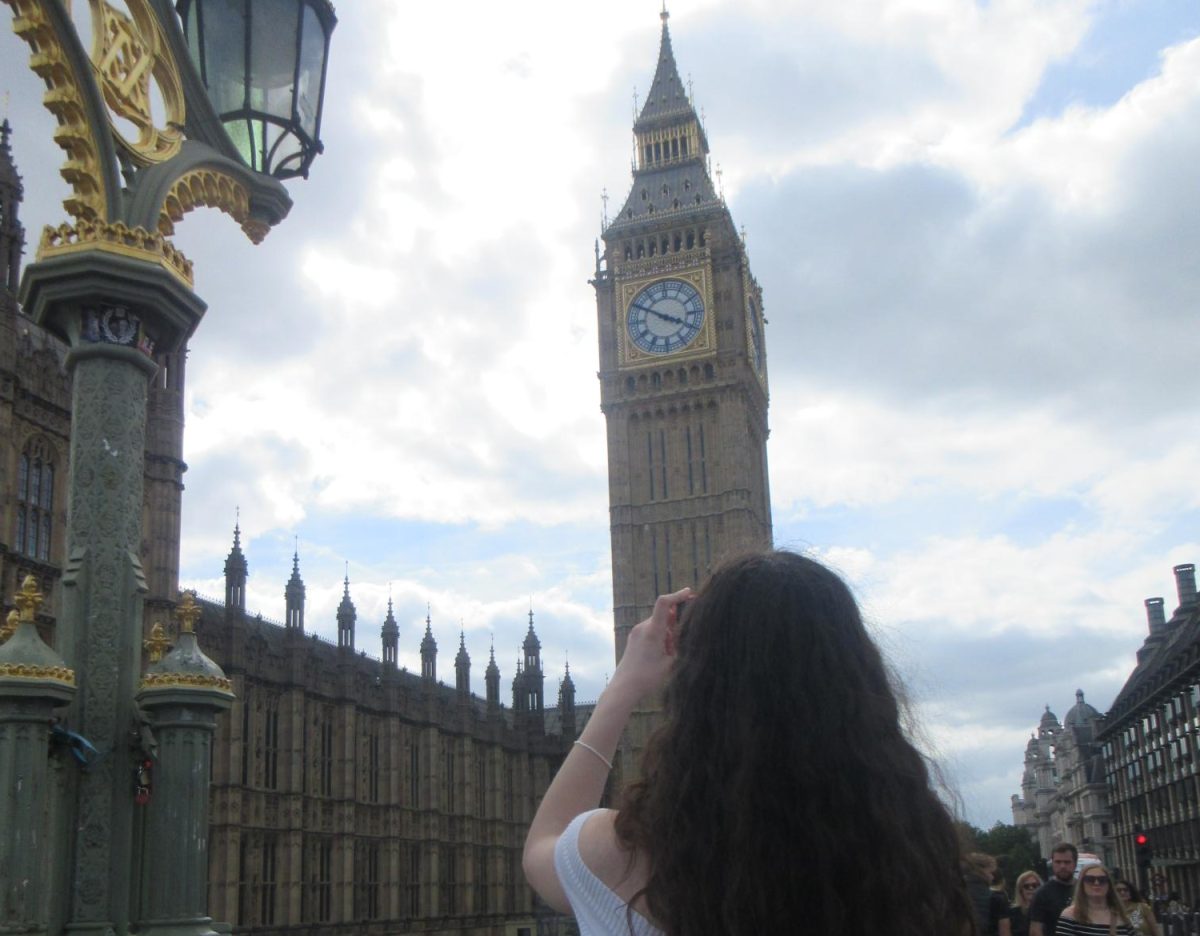
Thus, practical learning began. One of the unique elements of any study abroad trip is the adjusted classroom: for these students, lectures were delivered on the steps of Royal Albert Hall, outside of the London Bridge Transit station, or near the Canopy Market, and our lessons on working recording and camera equipment were hosted on a dock next to Tower Bridge. Working around the city provided them with both a cultural immersion and preparation for any challenges they may face when working in an unfamiliar setting.
The entire trip was centered around working with the group Tomorrow’s Warriors, a nonprofit dedicated to creating accessible opportunities for youth to engage with jazz music. Students spent a day filming, interviewing, and taking time to connect with these musicians throughout their practices.
“Getting to see such young people have a passion for music, and have the resources to be able to perform in that capacity, with professionals, was truly just so inspiring. I was blown away by the time and care put into the program by everyone,” Randall said.
Students worked in different areas, each receiving specialized lessons on either filming the musicians or interviewing them behind the scenes. Sophomore Jack Eckardt took several communications classes during his first year at Eureka, but the filming he did was completely new to him.
“I needed to get close-up or far shots without getting certain people in them, while also getting different perspectives. Maybe the angle sets a tone for the video, but it was stuff I’d never done before,” Eckardt said.
Despite the initial stress of learning the new skills, students gathered a multitude of clips to begin compiling.
Outside of the filming day and class lectures, students were given freedom to explore the city, where they went sightseeing, tried cultural foods, spoke to locals, or instead, traveled to nearby towns.
“We went to a small town, Dover, on the coast, which, in our eyes, was this amazing, beautiful place. Once we talked to locals in London about us going there, they were confused why the hell we would go to Dover and not somewhere more exciting,” Eckardt said.
Between learning new professional and practical skills, adjusting to cultural differences, and going out of their way to experience an unfamiliar lifestyle, students left with a variety of abilities and newfound confidence that will assist them in their growing careers and lives post-Eureka, making college the perfect time in their lives to visit another country.
“You get class credit for it, and you get space in your life that you can actually go and enjoy this. All of those things become excessively harder to navigate when you have a job and real world responsibility,” Duncan said.
To fund international trips, students may utilize many Eureka financial resources, including their Experiential Learning Grant, STRAW Scholarships, Reagan Leadership Funds, or paid out-of-pocket.
Next summer, Professor Carver will be taking a group of students on a study abroad trip to Italy. For more information, be on the lookout for emails from the Study Abroad Coordinator.